

Dog Days makes Savannah a DIY destination
There’s so much to dig about Dog Days Fest – a DIY music festival that just wrapped up its fourth year in hot and historic Savannah, Georgia.
Author’s note: I tend to avoid summer music festivals. The idea of competing for decent stage views in huge crowds while cooking in the sun and paying too much for bland food and warm beer is just flat out not what I want out of a live music experience. I’ve been burned too many times by the allure of a mind-blowing lineup only to see maybe two decent performances and then be miserable during all the rest.
That’s definitely not the Dog Days experience. For me, this scrappy festival has cracked the code on creating a comfortable outdoor live experience with a lineup of incredibly diverse artists from across the Southeast and beyond. More than that, I learned it’s also a critical point of conversion for a small but passionate local music scene
THE DOG DAYS/SAVANNAH CONNECTION
The majority of Dog Days Fest (DDF) this year happened at Starland Yard, a food park turned festival ground nestled within the hip Starland district.The two main DDF stages were maybe 50 yards from one another, which made walking between them a breeze.
This year, Dog Days promised a weekend that showcased a wide range of alternative music: black metal, alternative pop, country, garage punk, shoegaze, hardcore, and more all had their moment in the Savannah sun. According to a few locals and organizers, this eclectic mix rings true to the city’s musical identity.
“So, Savannah has always been a huge music city. Throughout the ‘80s and ‘90s, there were huge movements, especially in the metal world,” said Nat Lacuna, vocalist and bass player of Rosemary Nods Upon the Grave, a band that offered the first welcome dose of heaviness to the fest on Friday.
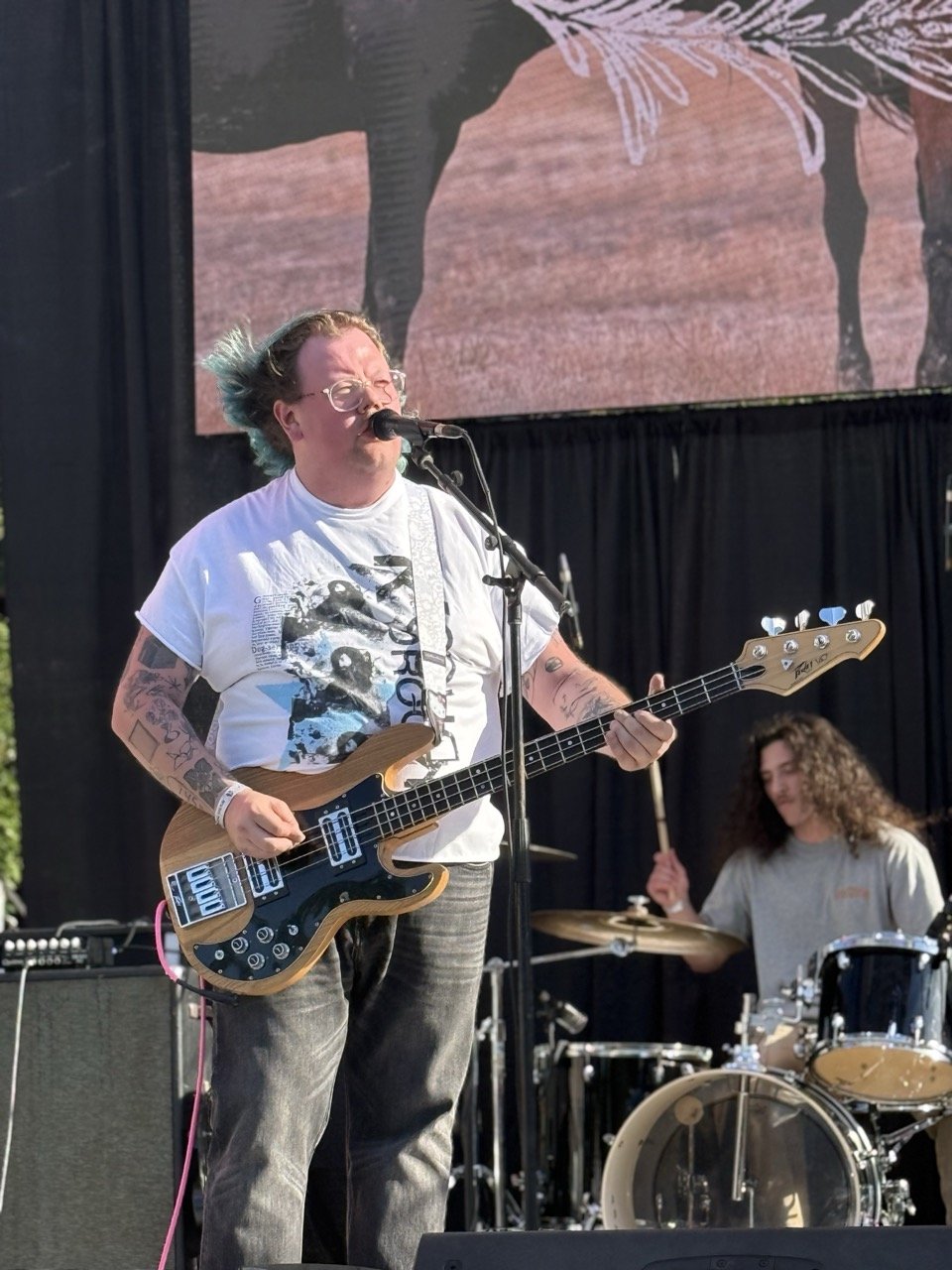
Rosemary Nods Upon the Grave
Beyond their musical role in Rosemary, Lacuna is a true DIY veteran, booking shows across the Southeast and touring with acts like The Callous Daoboys, Midwife, and The Body. To Lacuna, Dog Days breathes vital life back into Savannah’s local music community.
“We’re just now, as a scene, starting to get back on our feet, we have some bigger venues that have started to bring in more national and international touring acts,” they said. “I mean, almost every headliner of Dog Days has gone on in the following 12 months to become huge. It’s very cool to see.”
When I talked to Bud Green, a producer and financier of the fest, he said a guiding light for curating the festival’s lineup was to find artists just on the cusp of breaking out. For reference, Geese, the critically-fawned over NYC upstarts who appeared on Saturday Night Live recently, headlined Dog Days last year. Alt-country superstar MJ Lenderman headlined the year before.
“We like to get people where, maybe a year from now, we can’t afford them.” said Green “We like to get a mix of everything. Surprise is the key.”
DAY 1: HEAT AND RELEASE
From the name to the branding, Dog Days leans into the natural heat and humidity of Savannah. With peak temps around the mid 80’s over the weekend, it was never unbearable, but the Savannah sun is still no joke at midday
By day one, I was convinced Savannah’s swelter was a feature, not a flaw, to the Dog Days experience. It added to the pressure cooker of a live show from Drook, a trio from Richmond, Virginia, who make Y2k pop that’s cracked and warped by glitched electronics and Cocteau Twins-style swoon.
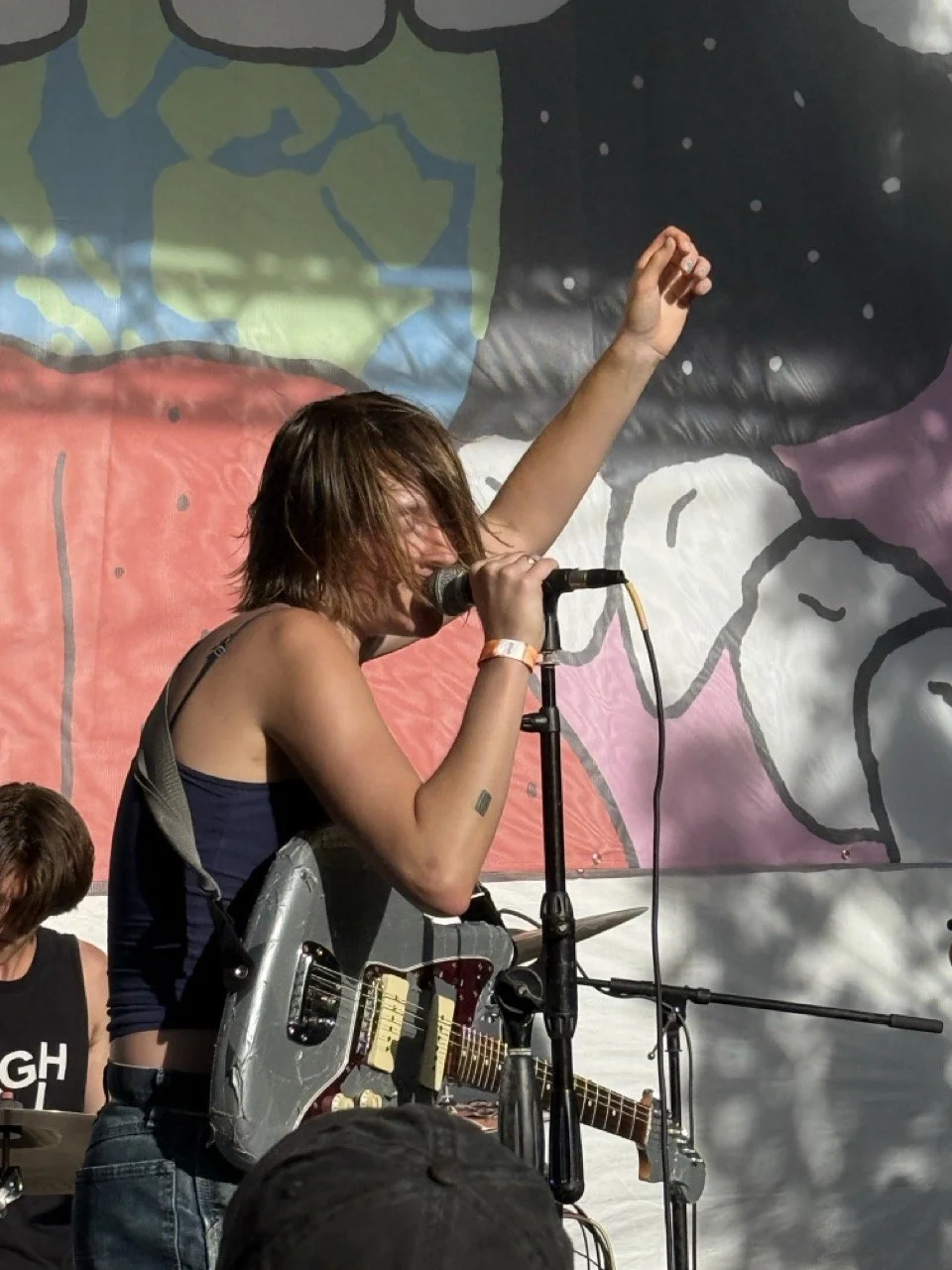
Drook
During their set, the band seemed to do battle with the evening’s last blasts of heat, their setlist ratcheting up in tension as the temperature took hold. The band closed their set with their signature song “Sprinter,” a restless anthem about having your world turned upside down by an alluring stranger that features an inescapable earworm of a backing beat.
Conversely, rising New York band Winter’s gauzy and lovelorn dream pop provided a cool sonic breeze as the sun sank down into the clouds later that evening. The band’s set pulled heavily from Adult Romantix, the breakout album they released to critical acclaim last year.
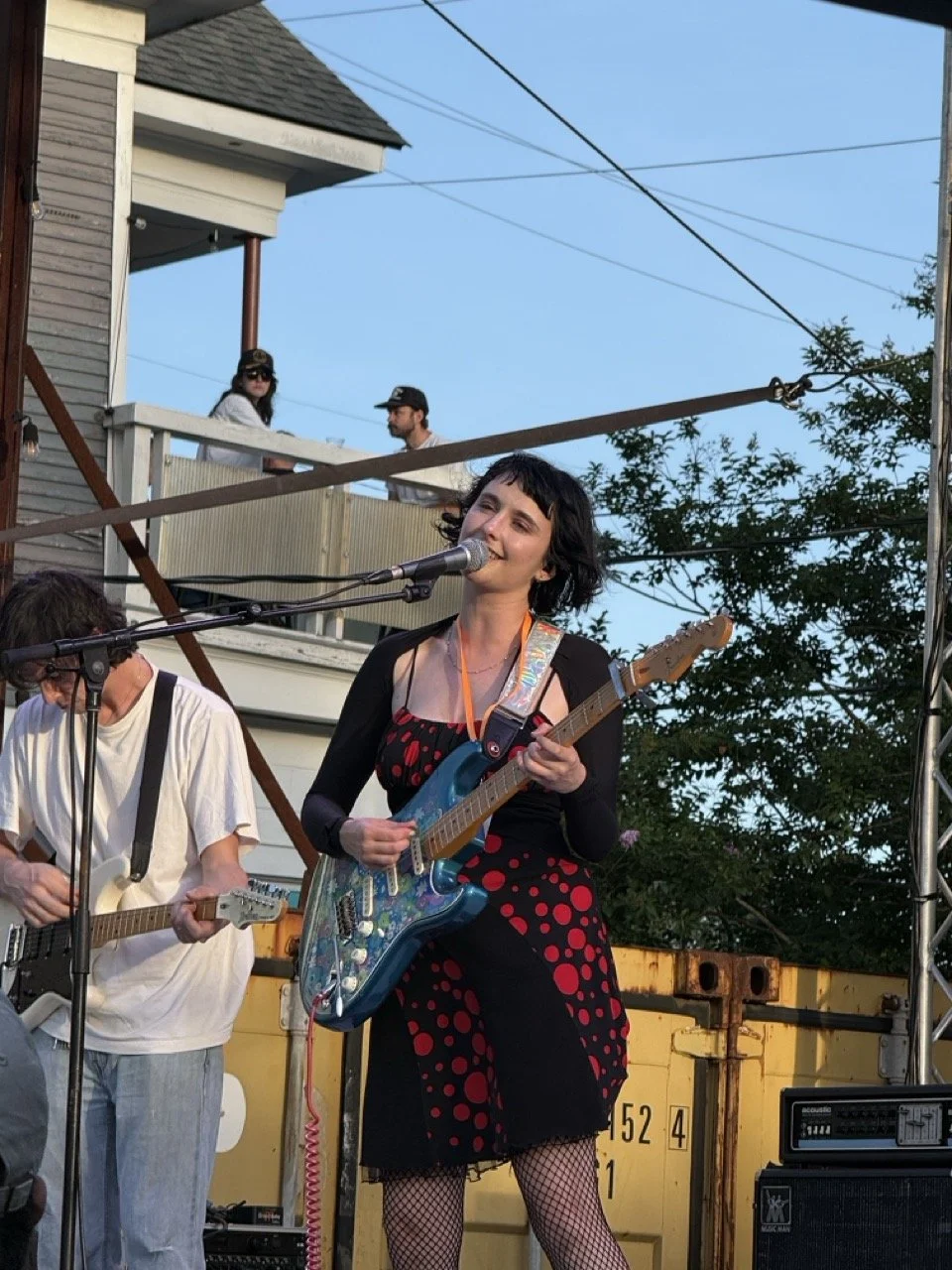
Winter
“I hope that the album resonates to people in their own way, in their own summer stories,” singer Samira Winter told me shortly after her set. Judging by the faraway looks and gentle head bobs of the crowd during the aching “Without You” and playful “Sunday,” her target found their marks.
As evening set in, Atlanta’s Upchuck took and dominated the main stage like it was their born destiny. The five-piece make punk rock that’s tough, brash, and as chrome-plated in sound as the grill singer Kaila “KT” Thompson bares on the cover of their latest album, I’m Nice Now.
Upchuck came out swinging with ferocity and a honed stage presence impressive for a band so young – it wasn’t long before their anthems riled the crowd up into a moshing frenzy. KT was the ringleader of that mania, explaining that the rush from the crowd is a symbiotic relationship.
“It’s always reviving,” said Thompson. “We feed each other at all times – if the crowd’s going crazy, I’m going crazier. We’re all here in the same space, in this energy, so I want to be where [they’re] at!”
That communal energy spilled over perfectly when Los Angeles duo Sextile took the stage to close the first night of fest.
If you’re unfamiliar, Sextile are party starters with a purpose - while the vast majority of their set was dedicated to making the crowd move to the pulsing throb of skewed EDM, they also used their time on stage to talk about inclusivity, Pride month, and the murder of Alex Pretti by ICE agents, all while waving a giant flag that read “No one is free until we are all free.”
If past years of Dog Days are any indication, I think it’s fair to say Friday’s headliners might very well grace bigger stages in 12 months time. Upchuck feels primed and ready to explode in a world where a band like Turnstile is winning Grammy’s. And I could see those craving the sweaty abandon of BRAT summer flocking to Sextile’s hedonistic but politically charged dance parties.
DAY 2: MORE MOSHING
I have yet to confirm with organizers, but I highly suspect Saturday’s lineup and schedule were curated perfectly to prime the crowd for Osees’ inimitable live show.
Before that wild set, I started the day by catching Hudson Freeman, a young songwriter originally from Texas who now writes dusty folk with a serrated edge in New York.
Freeman’s music is lonely and acerbic – he often seems to sing from the perspective of a perpetual underdog who knows way more than he lets on. In the middle of his set, he asked the crowd if he and his backing band could get a little weird with their next song, before launching into “Junk Drawer,” a slippery, desperate number about getting overwhelmed by life.
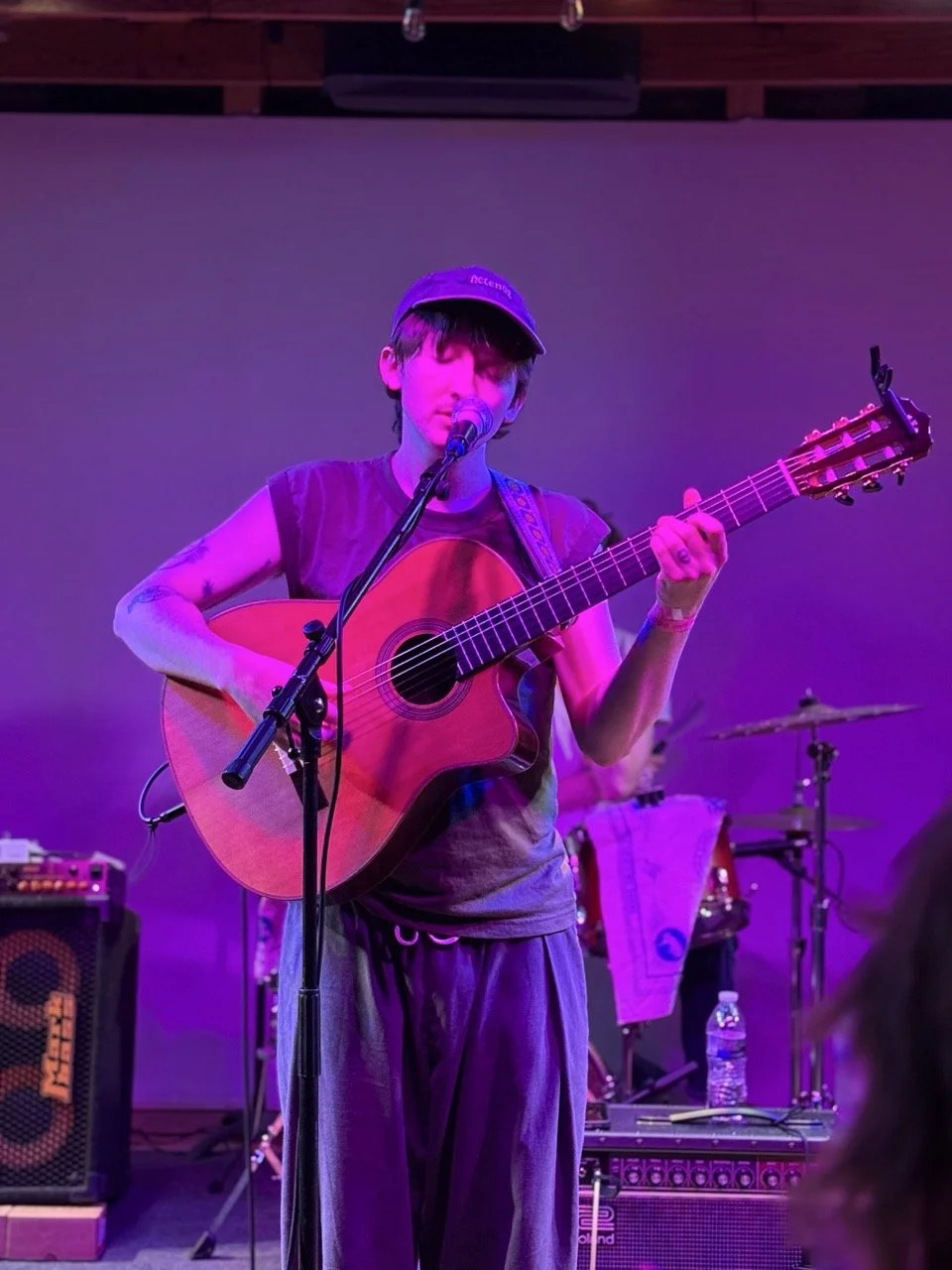
Hudson Freeman
While Freeman’s was one of the quieter sets of the fest (screaming solos from touring guitarist Sean Saville withstanding) he explained he’s always felt at home amongst harder punk and metal acts.
“To me, I think people are often expecting very sweet singer-songwriter music – and I don’t really like to be that when I’m playing,” said Freeman.
Back at the Yard, Savannah shoegazers Charlie’s Poolhouse, Atlanta alternative experimentalists Sword II, and Boise alt-country twangers Brand New Companion brought that patented mix of Dog Days genre hopping to the two main stages, delivering fine sets that drew decent crowds.
Things ramped up later in the afternoon during Sharp Pins, signees to K Records imprint Perennial, who are led by singer Kai Slater (also of young Matador noise makers Lifeguard).
Personally, Sharp Pins’ recorded output has never held my attention. Although it leans authentically into an homage of ‘60s psychedelia and 70’s power pop (genres I love), I’ve been unimpressed so far.
That’s why I was caught so completely off guard by their live show. Slater’s touring experience with his other band really shows – he was jack-knife jumping and hooping and hollering throughout the band’s set like a seasoned rockstar. They were a total blast live, and I’ve had “Popafang” lodged in my brain ever since.
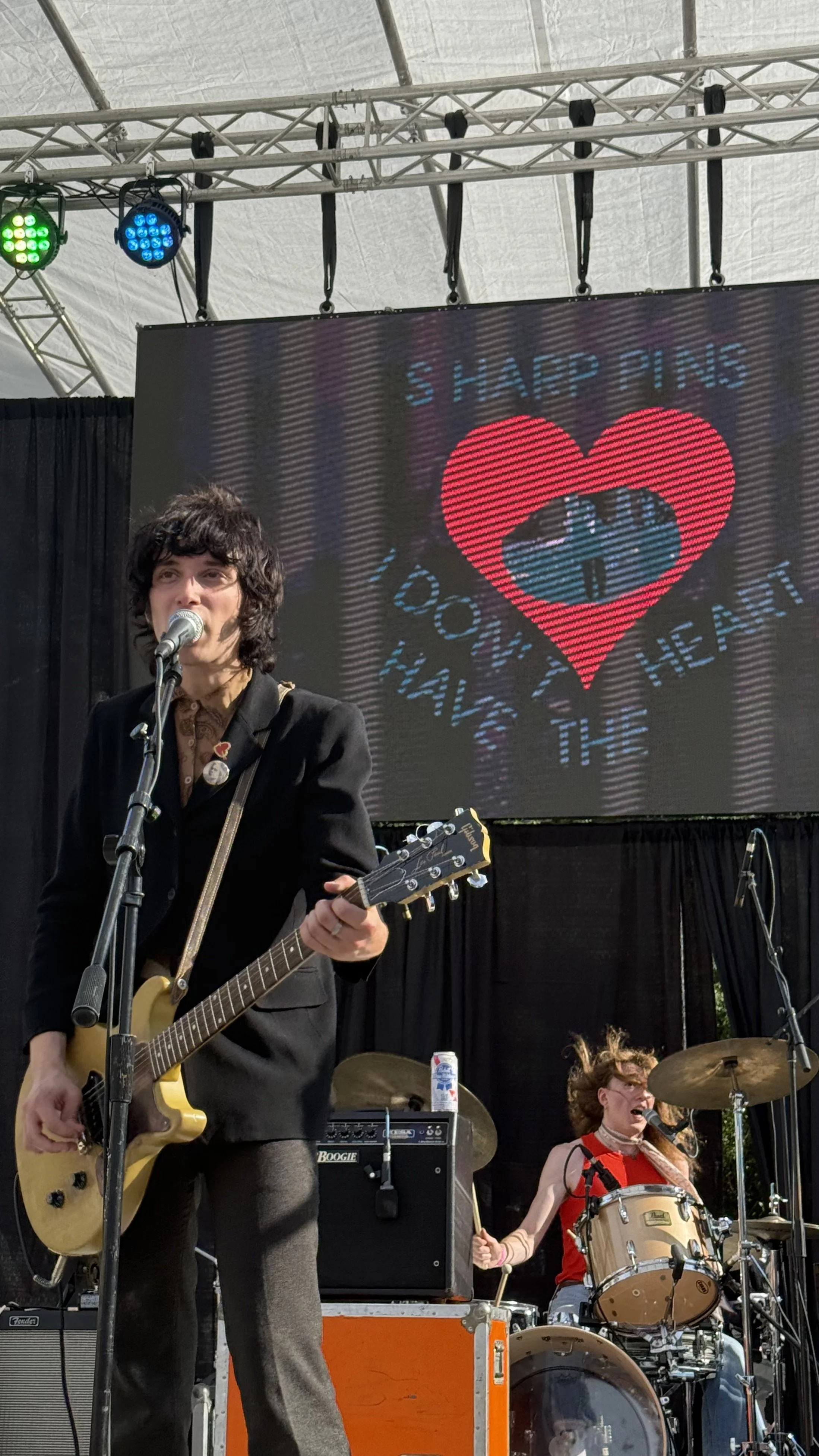
Sharp Pins
After Sharp Pins, Indiana’s Liquids, a band of rapid garage punks, lit the long fuse to Osees. Singer Mat Williams was completely beet-red in the face and drenched in sweat by the time his band left the stage, which made sense – they’d ushered in the first pits of the day.
Austin’s Portrayal of Guilt turned up the aggression even further with their colossal black metal sound that drew in a small but devoted crowd who didn’t move to the cacophony as much as absorb it in a slow tranced state.
By the time Minneapolis’ Uranium Club took the stage, more people had arrived and the crowd was primed and ready to pinball off each other. Uranium Club were happy to oblige, with their nervy, frenetic take on post-punk offering the exact kind of motorik rhythm the crowd needed for bottles of water to start flying.
The band I was most looking forward to seeing, Philadelphia’s Poison Ruïn, were the last to take the stage before Osees closed the fest down. For my money, there’s not a better punk/metal hybrid album released this year than Hymn from the Hills, which combines post-punk doom with dungeon-synth atmosphere.
While it was a joy to see those songs played live, especially against a backdrop of crowd surfers, I couldn’t escape the feeling that Poison Ruïn held back. They sounded fine, but their performance and stage presence felt muted compared to the smaller acts earlier that afternoon that had made the crowd cannonball so hard so quickly.
OSEES TAKE THE THRONE
After Poison Ruïn, the crowd slowly gathered closer and closer to the main stage. Like just before a major weather event, there was electricity in the air.
After a long wait, Osees took the stage - but there was a problem. It was clear that John Dwyer, Osees’ wild-eyed leader and creative mastermind, was having trouble with his mic.
There was back and forth with their sound guy (I have a strong feeling many fans walked away shouting the name “CONNOR!” at each other, just as Dwyer did) and the audio troubleshooting unfortunately ate into the band’s set time.
Despite a slightly truncated show, once the band got going, I knew the lore was true. I can confirm: an Osees live show is a must-go experience for any fan seeking true unbridled rock n’ roll release. The pace and volume and intensity that band plays with is truly unlike anything I’ve seen.
While Dwyer’s goblin-like shouts and microphone-consuming antics are a major part of the spectacle, the true force behind Osees live show these days are dual drummers Dan Rincon and Paul Quattrone.
Ever since they joined forces in 2017 for late career lip buster Orc, Rincon and Quattrone’s impressive interlocking rhythms and sheer force in playing have not only made Osees louder, but added a deadly groove to their sordid songs.
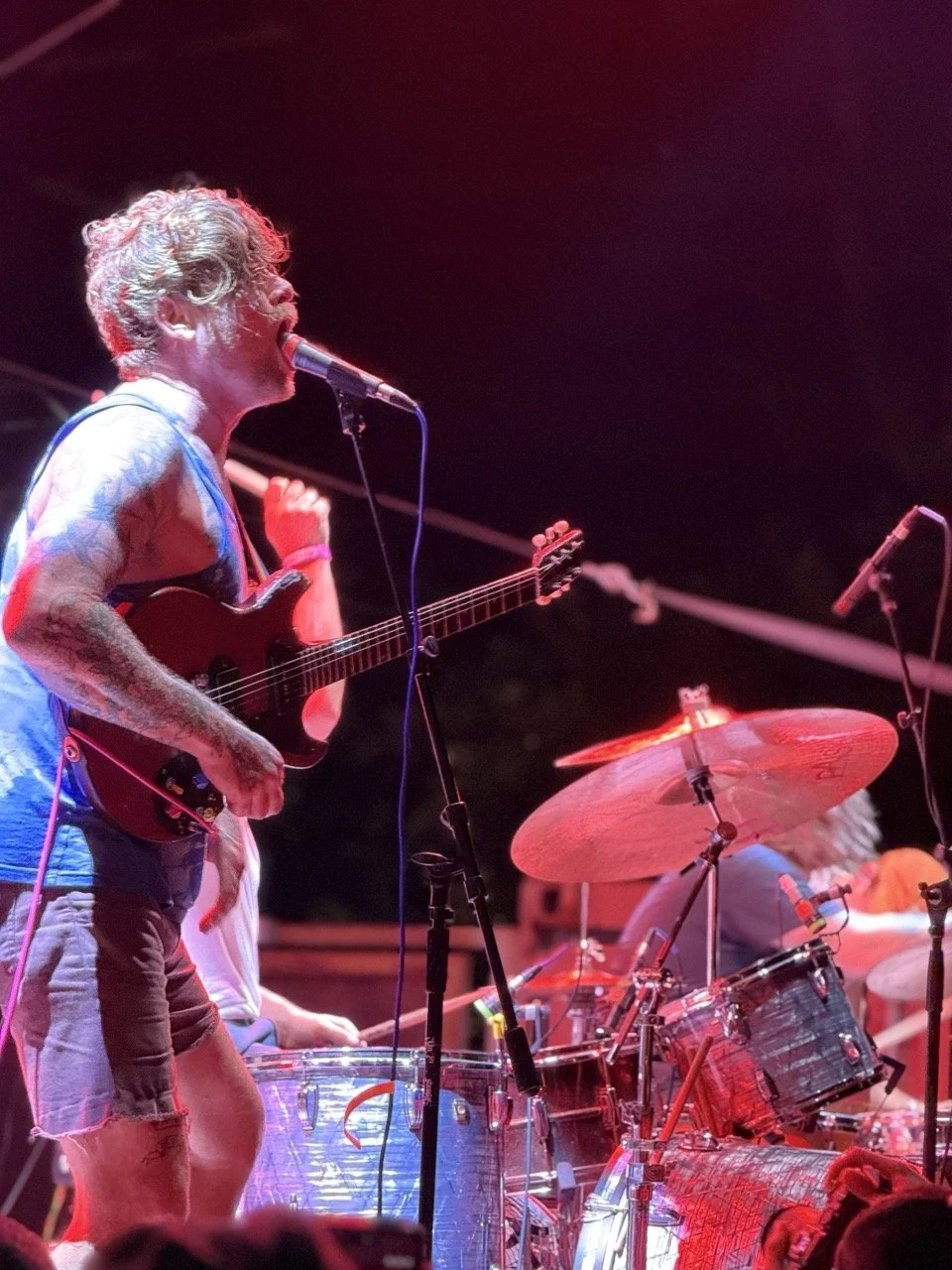
Osees
I know there must be photo and video evidence that shows the contrary, but I swear I never saw those drummers cease to hit their instruments; they were twin engines of flailing arms beating out war drum like rhythms for Dwyer and the crowd to go berserk to.
What made this particular set extra special was the presence of Brigid Dawson, the former full-time member of the band whose ghostly coos and backing vocals added a signature sweetness to many of the band’s classic albums like Help! and Carrion Crawler/The Dream.
Dog Days attendees were treated to quite a few cuts from those albums as well as OFF COURSE, the surprise album Osees dropped 24 hours before they took the stage.
The crowd ate up every second. I was to the far left of the stage, a fair distance away from the flailing center where only the bravest ventured to knock into one another, and I still felt the uncontrollable bump of the bodies near me.
The band closed the fest with an absolutely monolithic mashup of “Block of Ice” and “Ghost in the Trees” two deep cuts from 2008’s The Master’s Bedroom Is Worth Spending A Night In, moving from a 60’s garage fuzz beginning to a quieter, dubby middle, and then three minutes of some of the most relentless playing I’ve ever seen from a band.
THE END
As the crowd dispersed in a slight daze and Starland Yard began to empty, I debated going back to the hotel to crash. Two days of live music is a joy and privilege to experience, but it wears on the body.
However, I forced myself to make one more stop – the Wormhole, a beloved local dive bar next door to Starland Yard that hosted the final night’s official after parties.
When I walked in, Chris Casey, a young local musician who fuses alt-rap lyricism with alt-rock riffs, had already taken the stage. I’d met him earlier in the day during an interview, and I was curious to see his set.
It was well worth the delay in bedtime. Casey is a musician I’d encourage everyone to keep an eye on: He completely owned the Wormhole stage, leaping into the air just as his backing launched into a breakdown.
Before launching into his song “Cow Killer,” he told the crowd it was all about his experience growing up in the South. The lyrics are a frank discussion of code switching, bigotry, and carving out a sense of home in a place that’s actively hostile to your skin color.
Needless to say, it’s a heavy song. I saw a lot of music in those two days in Savannah, but Casey’s performance rang as one of the best and bravest.
When I caught up with him earlier in the day, the young musician explained how the Savannah scene inspired him to get on stage in the first place.
“Everyone involved is really passionate. A lot of weird alternative music – that was the first exposure to live music I got. Just house shows, and small venues,” he said.
According to Casey, Dog Days is where it all comes together, where bands and fans and collaborators gather every summer to share that passion.
Watching Casey and his band own the Wormhole, the big black X’s on their showing just how young they were, was the last bit of evidence I needed to know that Dog Days does it right. The fest isn’t just a celebration of DIY music, it’s a shot in the arm to a tight-knit Savannah scene with a lot to say.
By Reed Strength
