

Fust Goes For The Gut
I’m a sucker for an emotional gut punch. I love a song that lures me in with beauty and then, like a carnivorous plant, bites down hard on a soft emotion or memory that instantly bursts. Next thing I know, I’m having a come apart while I wash dishes or commute home. But it’s a feel good kind of hurt. The kind that shakes me awake and reminds me I’m human.
A lot of those lyrical moments landmine Big Ugly, the third-ish album by North Carolina band Fust and my favorite release of 2025. Wrapped in the golden warble of main songwriter Aaron Dowdy, these are 12 gorgeous cuts of mostly gentle country rock that have soundtracked the majority of my year.
Sure, if you aren’t paying attention, you could easily put Big Ugly on while grilling during a college football weekend. But go in with ears perked and 32 years embedded in the deep south? You’ll start to see ghosts – of yourself, of people you knew, of people you’ve only heard stories about and have stayed away from.
Big Ugly, true to its name, is packed to the brim with bruised and weary southern character studies. Of people so far down on their luck they’ve made a home out of rock bottom. The black sheep family members who are always “put up with” at family functions. With the right chemicals, they can feel as free as a sparkler thrown off a roof. But mostly, they question why they should get out of bed if their pain will get up to.
It’s heavy stuff to wade through in an already dark year like 2025. But I’ve willingly plunged into Big Ugly’s depths again and again not to wallow, but to admire the long, golden vein of empathy that threads through these 12 songs.
Like a lot of great music in 2025, Big Ugly sounds like an album that was recorded, written, and inspired in the south. Fust joins a growing list of likeminded indie rock bands proudly flexing twangy accents and pedal steel – from Florry to Friendship to Ryan Davis and the Roadhouse Band. Big Ugly was recorded in 10 days at Drop of Sun, the same studio as Wednesday’s last three records, and was released on Dear Life Records, the same as Boat Songs. MJ Lenderman himself played guitar on the last Fust record.
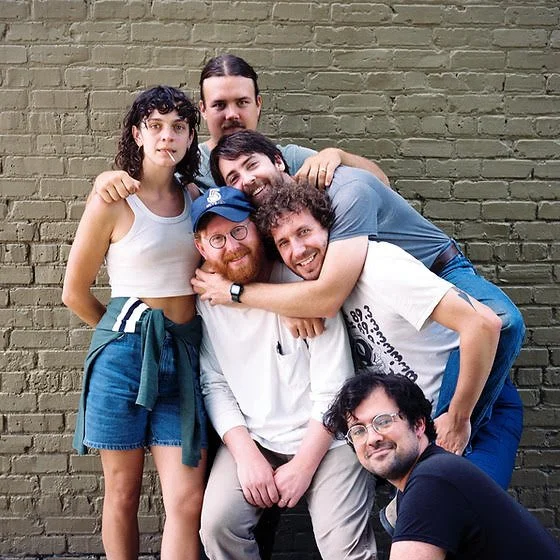
Fust (photo by Charlie Boss)
While those artists are incredible and write about the south with similar wit, poetry, and depth, I haven’t heard anyone do it quite like Dowdy. His descriptions of hard living along the “Big Ugly,” a tributary of West Virginia’s Guyandotte River, feel startlingly raw and real. Like the best songwriters, Dowdy doesn’t just write about people - he uncorks everything from their deepest fears to their daily shopping lists and lets it all spill into his band’s songs.
According to press materials, Dowdy’s got deep family roots in West Virginia and wrote the majority of Big Ugly after taking trips there with his grandmother.
I’ve never been to West Virginia. I’ve never seen the Guyandotte River. I’ve never eaten an OTC roll or bought drugs at a Country Boy’s gas station. But the magic of Big Ugly is that these touchstones of Appalachia embedded in its songs are now as real to me as the one’s I suspect Dowdy made up, like Maggie’s General Store down the mountain or the torn-down hospital out on route 11.
These whispers of truth and fiction transcend their West Virginian origins to reflect back my experience growing up in the greater southeast. Big Ugly’s characters are stubborn and loving and drunk and so deeply family-first that it anchors them to lifestyles that might kill them.
When Fust played “Jody” on a CBS Saturday Morning Session a few months back, I hope those tuning in knew the kind of emotional walloping they were in for over their morning coffee. From my read, “Jody” is the story of an aging couple who routinely find themselves at the bottom of several bottles to numb the volcanic and unforgiving pain of life.
“I’ll always love you when you’re messed up” is the song’s chorus – both a shrugging acknowledgement of enablement and a heartfelt promise of mercy and acceptance. It’s a mix of sweet and sad that I think can touch just about anyone, but it’ll absolutely level you if you’ve ever walked the thin tightrope of compassion and condemnation that is someone else’s substance abuse.
This lyric especially just guts me every time: “As southern kids we learned to drink enough/it’s all we’ve got and it’s easy/cause sometimes it still hurts to see you love me.”
None of Dowdy’s characters are heroes. In real life, you’d probably put distance between yourself and their all but assured self-destruction. On “Bleached,” Dowdy marvels at the unvarnished innocence of youth and contrasts it to the freedom his character strives for by numbing their pain through either alcohol or death: “If I am gone, then I’m gone/I am not lighter, just because I’m gone.”
It helps that the music is so compelling. While there’s no moment quite as goose-bump inducing as the mounting fury of “Violent Jubilee” from Fust’s last album, drummer Avery Sullivan, guitarist John Wallace, pianist Frank Meadows, pedal steel player Justin Morris, and multi-instrumentalist Oliver Child carefully wrap Dowdy’s pain in AM honey gold that sounds like the smell of mountain air.
And then there’s fiddle player Libby Rodenbough. While Dowdy is undoubtedly the creative force all of Big Ugly springs from, I’d argue Rodenbough’s fiddle is the album’s crucial second character. Her playing is the sunlight breaking through the clouds of “Doghole”, the vast stretch of stars that hang over the pondering of “What’s His Name,” and the sound of ink-dried fate that gives the title track its weight.
“Mountain Language,” easily the loudest track on Big Ugly, temporarily abandons the living room devotional of its neighboring songs for boot stomping Drive-By Truckers riffage and a lighters-up chorus. “Oh what country, friends, is this?” asks Dowdy, borrowing Shakespeare to lament the tragedy of inflation and stagnant job markets on rural areas.
Despite those insurmountable obstacles, Dowdy uses that song’s chorus to dare to hope and dream of a time where even the hardest of places and lives can transcend toxic tradition and cycles to flourish once again.
It was the one song I needed to hear when I caught them at Birmingham, Alabama’s Woodlawn Theater this past April. I’d come ready to belt out its brazen chorus with a crowd of locals that I suspected could empathize with a longshot hope that, maybe one day, our state wouldn’t be a punchline of low education rankings, normalized political corruption, and the long shadow of unforgivable sins.
I didn’t get it. That show was unfortunately one of the most sparsely attended I’d seen this year, the small crowd haphazardly spilled out in small clumps from the stage to the bar.
I can’t blame Dowdy and his band if they felt the vibe wasn’t right for an anthem. Instead, they played a rousing, intimate set of songs from Genevieve, Big Ugly, and about 30 seconds of Rebecca Black’s “Friday.” It was sweet and perfect, even without “Mountain Language.”
What I vividly remember from that show is Dowdy’s signature stage move: he’d turn his head and body to one of his bandmates on either side of him for a few bars, and then whip back to the mic to hit the chorus or a particularly big moment. It felt to me like he was trying to share a small moment with them before creating a bigger moment for us.
In the first verse of “Mountain Language,” Dowdy describes the duality of where you come from and where you’ve been. That no matter how much you learn and grow elsewhere, you’re tethered to your roots in an inextricable way forever. There’s a beauty in that notion that also bites down on a certain soft spot I have. It hurts at first, but it also makes me feel whole.
By Reed Strength
