

Thornton’s debut is full of plainspoken beauty
I think Oklahoma songwriter Ramsey Thornton puts a lot of stock into being understood. Or at least, that’s what I’m led to believe from listening to his debut album for Gar Hole Records, I Called It!
“Intensely plainspoken” is perhaps the best way I can think to describe Thornton’s songwriting across I Called It! – despite how gentle the music is to the ear, his words always feel concrete. He doesn’t lean on woodsy metaphors or tired aphorisms to call you out for lying – he’s just gonna say, ”Now if you’d just look me in the eye/Things maybe wouldn’t seem as artificial.”
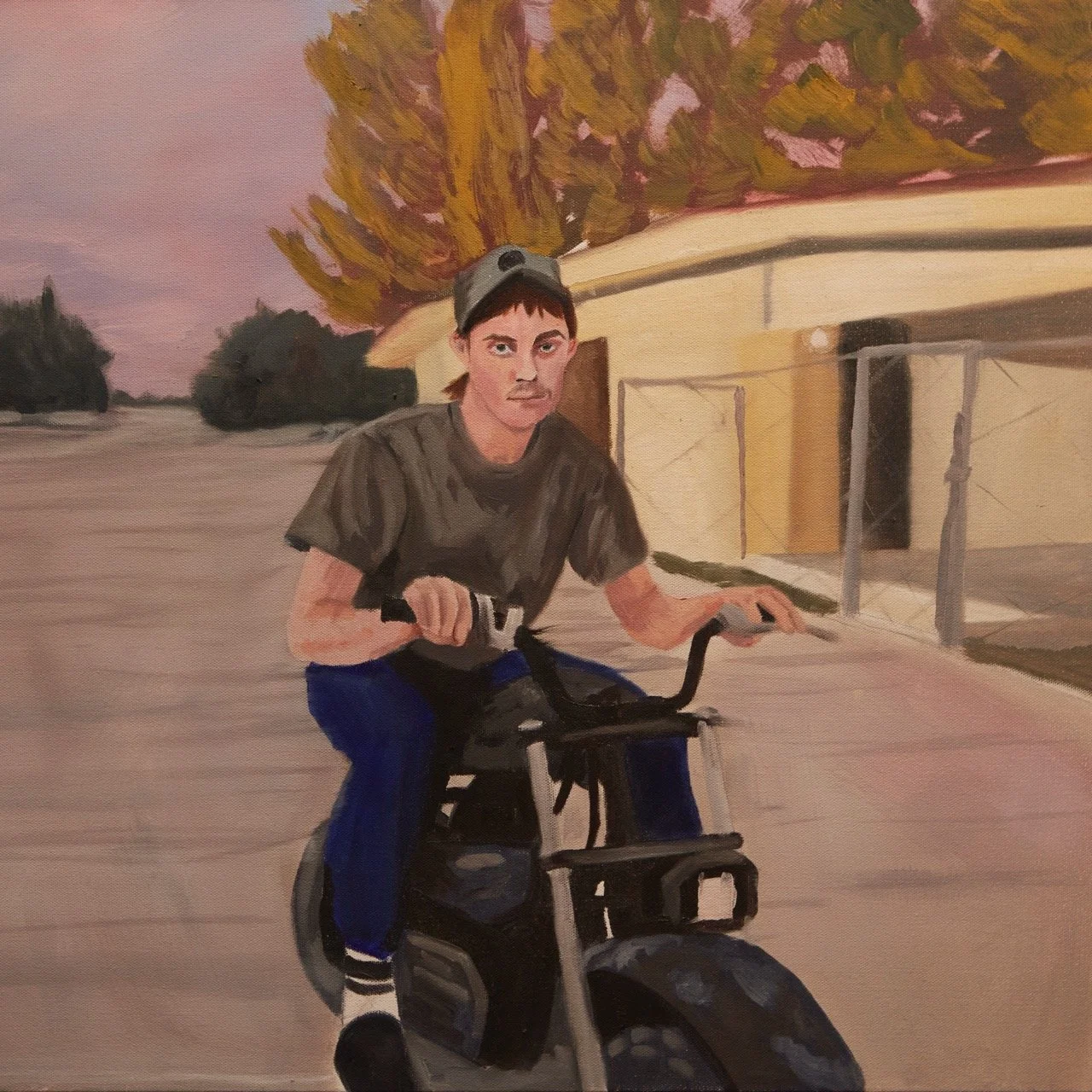
Cover art for Ramsey Thornton’s I Called It!
While Thornton is technically a new voice as a solo act, he’s a seasoned player within the Tulsa music scene, cutting his teeth as a prodigious banjo picker and drummer.
Seasoned players may scratch their head at Thornton’s unique approach to guitar, where he replaces the low E string with a high drone that stays open. His fingerpicking patterns are certainly graceful and heavenly to take in, but there’s also an anxious undercurrent to Thornton’s style that fits the intensity of his words.
While many will rightfully focus on his guitar playing, it’s his drumming throughout that gobsmacks me the most. He knows all the secret spots to hit these songs in order to keep them moving without losing their featherweight tone and feel.
Thornton recorded I Called It! in upstate New York with Sam Skinner, formerly of Pinegrove, and musician Isaac Stalling, as well as his friend Chad Copelin back home in Tulsa. Together, his backing crew add a light coat of piano, synth, and lap steel that allows the natural varnish of these songs to sparkle instead of sounding too dry or one-dimensional.
When he’s not lyrically zooming in on the big effect the little mundanities of life hold (a missing tree in a backyard, the gentle gurgle of a coffeemaker, the quiet grandiosity of a passing meteor), he’s picking apart and playing back moments of intimate communication with those around him.
“Chase After You” reads like a well-meaning but blunt moment of trying to align with a lover about the opposing twin eclipses of romantic commitment and the finality of life. Who hasn’t said or felt the tongue-tied emotion behind a line like “I don’t mean to make you cry, but aren’t I making a good point?”
In “Home Base,” fellow chronic apologizers can relate to these opening lines of handwringing: “I’m sure you’ll come around/I’m pretty sure of it/Hope that’s no offense to you.”
Not all of Thornton’s turns-of-phrase are perfect – I see what he’s getting at with the wry humor of a line like “I always tend to think I’m the one with the answer/That usually works out besides the time you have the answer,” but the repetition and staccato delivery are a speedbump in the otherwise smooth ride of “Chase After You”.
If there’s one Achilles heel that’s present on this impressively rich debut, it’s Thornton’s singing and vocal melodies. For all the skill he’s honed as a instrumentalist over the years, there are a few moments where he seems to still be getting the hang of his singing.
These growing pains sour the album single “Dripping Coffee,” where Thornton chooses to enunciate and hang on the ending codas of the title phrase – “drip-PING coff-EE.”
In the middle of “Window,” Thornton steps outside the song’s melody and gently tiptoes into what sounds to my ears like near spoken word. While he mostly sells this moment, it stands out as another instance where Thornton is figuring himself out melodically.
On the other hand, “Tony’s Song,” a mid-album duet with fellow Oklahoma songwriter Ken Pomeroy, offers an example of his vocal ability at its best. The way Thornton’s voice blends with Pomeroy’s in the chorus on the end of the word “leave” causes goosebumps every time.
While the album’s first and middle halves are consistently strong, there’s a sequencing snag in the backhalf, where the dour notes of “Oil Capital” get carried through an interlude to the similarly paced and downcast “Hotshot” and “Fourth of July.”
Had these tracks been placed differently throughout the album, they may have had more of a chance to shine, but as is, this four-song stretch drags a bit.
Luckily, the album’s true ending comes through “I Took A Solo (Demo)” – and thank goodness for it. The central riff is one of Thornton’s best and most sumptuous – it’s spectral, warm, sad, and enveloping all at once.
“This is the least I’ve tried in my whole life,” he says in the song’s opening line – but no one’s falling for that. Across these 13 songs, Thornton may make beauty sound effortless, but just like his deliberate word choice, he’s a true craftsman. And I have a strong feeling he’s only going to get better.
By Reed Strength
